Why Corporate Alumni Strategies Fail at the Database
In Article 1 of this series, “The Illusion of the CRM: CRM vs Alumni Networking Platform, and Why You Need Both”, I made the case that CRM systems and alumni networking platforms serve fundamentally different functions. A CRM manages records and transactions. A dedicated alumni platform builds relationships. Most companies need both.
But owning both does not guarantee engagement.
That is the gap I want to close here.
87% of organizations running alumni programs say they need better engagement. Yet 80% still point to blogs, social posts, and e-newsletters as their primary channels. That gap is not a communication problem. It is an infrastructure problem.
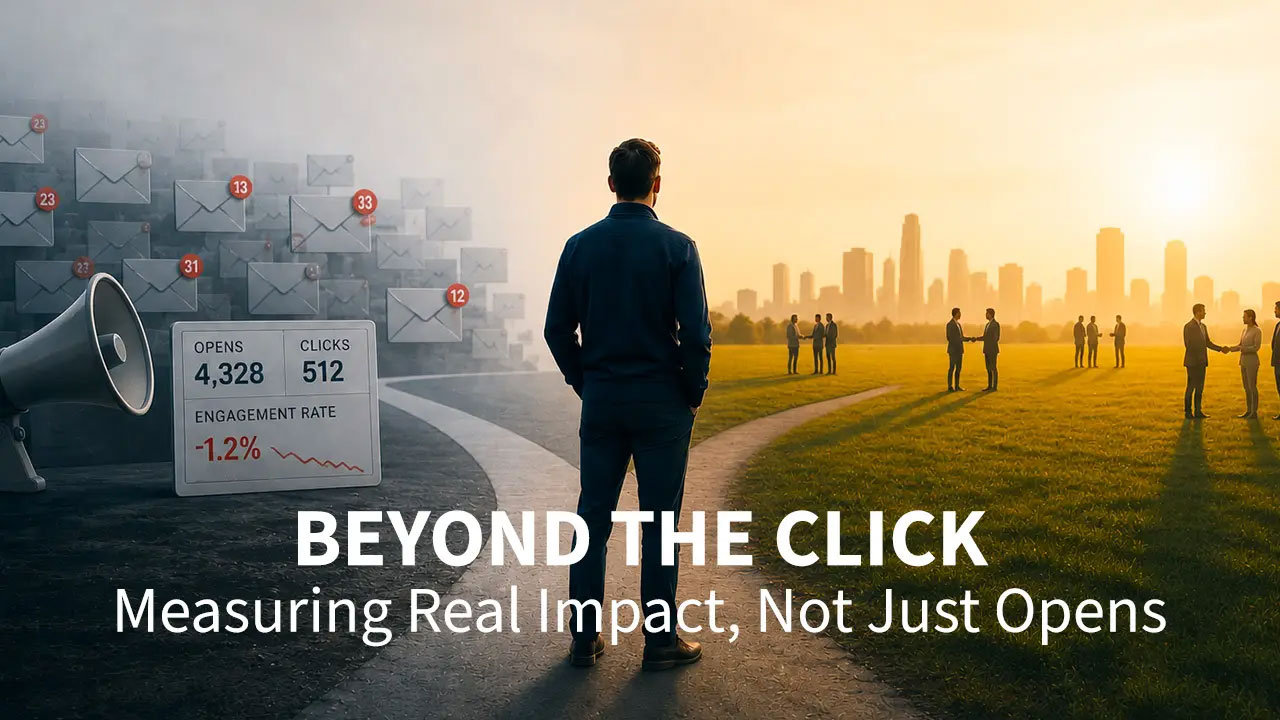
Here is what most CRM-led programs actually measure versus what actually matters:
- What they measure: email open rates, event sign-ups, newsletter subscribers
- What actually matters: boomerang hires, referral quality, advocacy actions, mentoring uptake, introductions to new business
- What the gap reveals: a system built for broadcasting, not for value exchange
If your strategy relies on broadcasting, you are not engaging. You are making noise.
This article answers the practical questions – what features matter, what stack you need, what metrics prove ROI. But it answers them through one lens: the operating model that turns former employees into a measurable business asset.
Why the CRM-Led Alumni Database Model Breaks
CRM systems are built for quarterly sales cycles. They move prospects through a pipeline, close transactions, and hand off to the next stage. That logic works for revenue operations. It does not work for multi-decade alumni relationships.
When companies force alumni journeys into CRM architecture, the result is predictable. Stale records. Fragmented ownership. Weak personalization. No visibility into actual participation. The system was never designed to track whether a former employee mentored someone, made a referral, or introduced a client. It was designed to track whether they opened an email.
That is a fundamental design mismatch.
The deeper problem is data silos. Alumni data sits in the ATS, the HRIS, the email platform, and the CRM itself. Different records, different update cadences, different owners. The result is inaccurate data, duplicated contacts, and engagement strategies built on a foundation that no one fully trusts.
Layering AI on top of this fragmentation does not solve the problem. It accelerates it. Each new tool creates technical debt trying to compensate for gaps the underlying architecture was never designed to close.
“Corporate CRMs are built for quarterly speed. Forcing alumni journeys into sales funnels creates friction and missed opportunities.” – monday.com, 2026 CRM Guide
Here is how the two models compare at the operating level:
| Dimension | CRM-Led Database | Dedicated Alumni Infrastructure |
| Primary design purpose | Transaction management | Relationship continuity |
| Alumni identity over time | Static record | Dynamic, evolving profile |
| Peer-to-peer interaction | Not supported | Core feature |
| Personalization capability | Campaign-level | Individual behavior-driven |
| Integration with talent outcomes | Indirect, manual | Native, real-time |
| Measurable engagement signals | Open rates, clicks | Referrals, mentoring, rehires, advocacy |
| Data ownership | Shared across systems | Centralized, owned |
| Scalability for alumni lifecycle | Low | High |
The issue is not whether CRM data has value. It does. The issue is whether CRM architecture can function as community infrastructure. It cannot.
From Archived Contacts to Active Relationship Capital
Most companies have not made this shift. The reframe is straightforward.
Former employees are not a communications audience. They are a source of rehiring efficiency, referral quality, advocacy reach, mentoring capacity, and market access. Your role is not to broadcast at them. It is to facilitate a network where value moves between alumni, current employees, and the business.
This is what owned relationship capital looks like in practice:
Step 1: Records
You have names, job titles, exit dates, and email addresses. That is administration. Necessary, but not sufficient. A database of former employees is not an alumni program. It is a contact list.
Step 2: Relationships
You build structured pathways for alumni to connect with each other, with current employees, and with the organization. Mentoring, peer groups, events, job boards, and advocacy workflows turn passive records into active participants. 70% of companies have already moved to third-party alumni platforms to make this shift, up 11% since 2022.
Step 3: Return
Participation generates measurable outcomes. Boomerang hires reduce time-to-productivity and cut recruitment costs. Referrals improve candidate quality. Advocacy strengthens the employer brand. Mentoring retains institutional knowledge. Introductions open commercial doors.
The strategic question changes from “How many emails did we send?” to “What business outcomes did this network produce?”
Leading platforms now prioritize real-time synchronization with core HR and CRM systems. That integration layer turns relationship activity into reportable business value – the kind that holds up in a CFO review.
What Features Actually Matter in a Corporate Alumni Platform
Most feature comparisons list capabilities without asking the harder question: does this create business value, or does it add complexity?
The right filter is not “does this platform have X?” It is “does X enable value exchange, participation, or a measurable outcome?” Apply that lens and the list shortens fast.
| Feature | What It Enables | Business Value |
| Peer networking and directories | Alumni connect with each other and current employees | Referrals, introductions, commercial access |
| Mentoring and matching | Structured knowledge transfer between alumni and employees | Retention, institutional knowledge, talent development |
| Job board and referral workflows | Alumni refer candidates and explore boomerang opportunities | Reduced hiring costs, higher candidate quality |
| Groups and micro-communities | Alumni cluster by function, cohort, region, or interest | Deeper participation, stronger advocacy, relevant content |
| Events management | Structured touchpoints beyond email | Repeat participation, relationship reinforcement |
| Direct messaging and real-time communication | Frictionless peer-to-peer contact | Network activation, faster value exchange |
| AI-driven matching and personalization | Tailored content, connections, and opportunities | Higher engagement frequency, relevant participation |
| Mobile-first access | Engagement without friction, on any device | Day-to-day participation, reduced drop-off |
| Advocacy and ambassador workflows | Alumni actively promote the employer brand | Employer brand reach, talent pipeline quality |
| Integration with HRIS and ATS | Alumni data syncs with core talent systems | Boomerang hire tracking, referral attribution, unified reporting |
| Analytics and participation dashboards | Visibility into who is active and what they are doing | ROI reporting, program justification, CFO-ready metrics |
| Branded, owned environment | Company controls the experience and the data | Data sovereignty, trust, long-term relationship continuity |
Integration Only Works When It Connects, Not Just Syncs
Integration matters only when it supports a connected engagement layer rather than another reporting silo. The goal is a unified view: alumni activity feeding back into talent systems so that a boomerang hire, a referral, or an advocacy action is traceable and attributable.
AI-driven matching should be evaluated by one standard: does it increase participation, referral activity, and opportunity flow? McKinsey research shows AI-driven personalization can lift engagement by around 25% when recommendations reflect actual user behavior. That is a meaningful signal for any program justifying its budget.
The Ownership Question
78% of alumni prefer to access benefits and programs online. A mobile-first, branded environment reduces the friction that kills participation. More importantly, it keeps the relationship inside an owned channel – not dependent on public platforms you do not control.
The business case for a dedicated platform is not about features. It is about whether the infrastructure you have built can generate the outcomes you are being asked to report.
The Metrics That Prove Corporate Alumni ROI
Open rates do not appear in a CFO’s investment review. Boomerang hires do. Referral conversion rates do. Advocacy reach does. If the metrics your alumni program produces cannot connect to talent outcomes, employer brand value, or commercial relationships, the program will always struggle to justify its budget.
A healthy corporate alumni community produces measurable signals across 4 categories:
- Talent outcomes: boomerang hire rate, time-to-productivity for returning employees, referral volume, referral-to-hire conversion, candidate quality scores
- Participation signals: repeat login rate, mentoring uptake, group activity, event return rate, direct message volume
- Advocacy indicators: employer brand mentions, referral source attribution, ambassador program participation, content sharing
- Relationship capital: introductions made, business development connections, partnership conversations initiated through the network
The reason most CRM-led programs cannot report these metrics is structural. A CRM captures campaign outputs. A dedicated alumni platform captures interaction patterns, network behavior, and participation depth. The data is fundamentally different because the architecture is fundamentally different.
Direct academic evidence strongly supports that segmented/personalized outreach increases engagement behaviors. The mechanism is not magic. It is relevance. When former employees receive content, opportunities, and connections that reflect their actual career profile and behavior, they participate. When they participate, they generate measurable business value – referrals, introductions, boomerang applications, and advocacy that a broadcast email cannot produce.
This is where the business case becomes commercially defensible. Not in the feature list. Not in the engagement dashboard. In the line items that show up when a CFO asks what the program actually produced.
Decision Test: Do You Have Alumni Infrastructure or Just Alumni Records?
If your current setup mainly stores data, sends updates, and logs attendance, it is administration infrastructure. That has value. But it is not relationship infrastructure, and it will not produce the outcomes you are being asked to deliver.
Run this test against your current stack:
- Can alumni connect directly with each other and with current employees, without going through a company-managed intermediary?
- Does your platform support structured mentoring, peer groups, and advocacy workflows, or just communications?
- Can you track a boomerang hire, a referral, or a business introduction back to alumni network activity?
- Do alumni have a dynamic, evolving profile that reflects their career progression after leaving, or just an exit record?
- Is participation data feeding back into your talent and HR systems in real time, or sitting in a separate reporting silo?
If the honest answer to most of these is no, you have alumni records. Not alumni infrastructure.
As I covered in Article 1 of this series, “The Illusion of the CRM: CRM vs Alumni Networking Platform, and Why You Need Both”, the system architecture question matters. But architecture alone does not produce engagement. The operating model has to follow.
The shift from database to dynamic community is not a technology decision. It is a leadership decision about what your former employees are worth to the business, and whether you are willing to build the infrastructure that proves it.
If you are evaluating whether your current model is delivering, start with the 5 questions above. If you are building the case for a more structured approach, I am happy to have that conversation.
This is Article 2 in the “From Databases to Dynamic Communities” series.
Frequently Asked Questions
What is the difference between a CRM and a dedicated alumni engagement platform?
A CRM is built for transaction management – moving prospects through a pipeline and closing deals. A dedicated alumni platform is built for relationship continuity – supporting peer networking, mentoring, referrals, and long-term participation. The two systems serve fundamentally different purposes. Most companies need both, but only one can function as community infrastructure.
Why do most corporate alumni programs fail to generate measurable ROI?
Because they are built on broadcast logic. Sending newsletters and tracking open rates is administration, not engagement. Programs that produce measurable ROI – boomerang hires, referrals, advocacy, mentoring – are built on infrastructure that enables value exchange, not just outbound communication.
What features should I look for in a corporate alumni engagement platform?
Prioritize capabilities that create interaction and traceable outcomes: peer networking, mentoring and matching, job boards and referral workflows, advocacy tools, groups, events, direct messaging, and AI-driven personalization. Integration with your HRIS and ATS is essential so that alumni activity feeds back into talent reporting. Everything else is secondary.
How do I measure the ROI of a corporate alumni program?
Stop measuring campaign outputs and start measuring business outcomes. The metrics that matter: boomerang hire rate, referral-to-hire conversion, mentoring uptake, repeat participation, advocacy reach, and business introductions generated through the network. These are the numbers that hold up in a CFO review.
Can a CRM be configured to function as an alumni engagement platform?
In theory, yes. In practice, the configuration cost, technical debt, and ongoing maintenance make it a poor investment. CRMs lack native peer-to-peer interaction, identity continuity, and community-specific workflows. Companies that try to force alumni engagement into CRM architecture typically end up with stale records and low participation. A purpose-built platform is structurally better suited.
What is boomerang hiring and why does it matter for alumni strategy?
Boomerang hiring is the practice of rehiring former employees. It matters because returning employees ramp faster, already understand the culture, and typically perform at a higher level than external hires. A well-structured alumni network creates the conditions for boomerang hiring by keeping former employees engaged, informed, and connected to current opportunities.
How does AI improve corporate alumni engagement?
AI-driven personalization can lift engagement by around 25% when recommendations reflect actual user behavior. In practice, this means matching alumni to relevant job opportunities, mentoring partners, peer groups, and content based on their career trajectory and platform activity. The result is higher participation frequency and more relevant value exchange.
What is the risk of relying on LinkedIn as an alumni engagement channel?
LinkedIn is a public platform you do not own or control. Your alumni data sits on their infrastructure, subject to their algorithm and policy changes. You cannot track participation depth, run referral workflows, or integrate activity back into your talent systems. It is a useful awareness channel, not a substitute for owned relationship infrastructure.
How long does it take to build a productive corporate alumni community?
It depends on the size of your alumni base and the quality of your existing data. Companies that launch with a clear value proposition – job opportunities, mentoring, peer access, exclusive content – typically see meaningful participation within the first 90 days. The programs that stall are the ones that launch with a newsletter and call it a community.
When should a company invest in dedicated alumni infrastructure?
When the cost of not having it becomes visible. If you are losing boomerang hire opportunities, generating referrals at a low rate, struggling to justify your employer brand spend, or sitting on a database of former employees with no structured way to activate them – that is the signal. The business case is straightforward: owned relationship infrastructure produces measurable talent and commercial outcomes that a CRM list cannot.